
6-Week Fitness Transformation: From Inconsistent Effort to Structured Progress
Most people don’t struggle with fitness because they lack effort. They struggle because they lack structure.
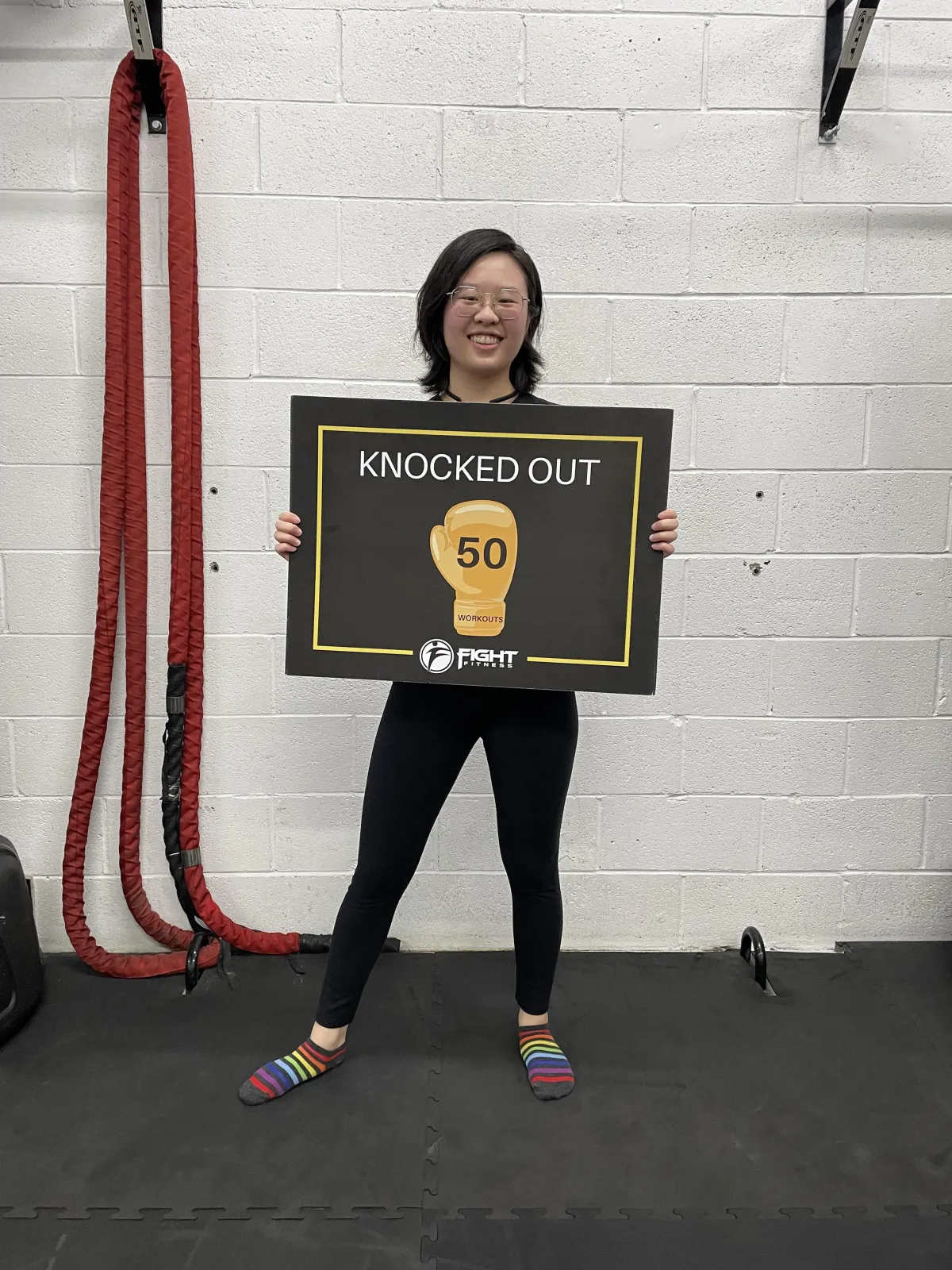
Jada Chang’s 6-week fitness transformation is a clear example of what happens when consistency, coaching, and a structured plan replace guesswork. At 23 years old, balancing school and multiple jobs, she wasn’t inactive. Like many people, she was simply inconsistent—and inconsistency always leads to average results.

Starting Point: “Healthy” Without Direction
Before joining the program, Jada described herself as “decently healthy,” but without any real direction in her training or nutrition. There was no structured plan, no defined routine, and no measurable progression. She wasn’t failing—she was maintaining. But maintenance without intention leads to stagnation.
Her baseline metrics reflected that common middle ground:
She weighed 118.6 pounds, had a body fat percentage of 31.8%, and a combined waist and hip measurement of 65 inches. Not out of shape, but not improving either. This is where most people get stuck—busy, active, but without a system that drives results.
The Turning Point: Structure Eliminates Guesswork
The biggest shift during the 6-week challenge wasn’t motivation—it was structure.
Instead of making daily decisions about what to eat or how to train, everything was mapped out. She followed a structured meal plan, committed to training three to four times per week, and stayed accountable within a coaching system designed to remove inconsistency.
The first phase was predictable. There was soreness from training, cravings for familiar comfort foods, and resistance to the new routine. This is where most people fall off.
But with structure in place, she didn’t have to rely on motivation. She just followed the system.
Over time, things began to shift. Training stopped feeling like a chore and became automatic. Nutrition became more intentional. Consistency stopped feeling forced and started feeling normal.
This is where real transformation begins—not when things feel easy, but when the system carries you through resistance.
Why the Scale Didn’t Tell the Full Story
At the end of six weeks, her physical metrics didn’t show dramatic change.
Her weight increased slightly to 119.2 pounds. Her body fat dropped marginally to 31.7%. She lost one inch overall.
Most people would look at those numbers and assume nothing significant happened.
That interpretation is wrong.
The real transformation showed up in her performance.
Her fitness test results improved across the board. She increased her bodyweight squats to 80 reps, adding 28 reps from her baseline. Her push-ups jumped to 26 reps, a 15-rep improvement. Her dead hang improved to just over a minute, adding 29 seconds. Burpees increased to 26 reps, and her curl-up crunches reached 65 reps, a 37-rep gain.
This level of improvement in just six weeks is not maintenance—it’s measurable adaptation.
Strength Gains: The Foundation of Fat Loss
At the beginning of the program, Jada was limited to lighter weights and had minimal strength progression.
Six weeks later, she was confidently using 12-pound dumbbells and progressing with kettlebell training. Beyond the numbers, there was visible muscle development in her arms and legs, along with a clear increase in endurance and control.
These changes matter more than short-term weight loss.
Strength gains indicate improved neuromuscular efficiency, increased work capacity, and a higher metabolic demand during training. This is what sets the stage for long-term fat loss and body recomposition.
Most people chase the scale. The scale is a lagging indicator. Strength and performance are leading indicators.
The Real Transformation: Habit Installation
Jada’s original goal wasn’t extreme weight loss or a dramatic physical overhaul. It was simple:
She wanted to build the habit of exercising regularly.
And she achieved it.
This is the highest return outcome of any fitness program. Once consistent habits are installed, everything else becomes predictable. Fat loss becomes a byproduct. Strength becomes scalable. Results begin to compound over time.
Without this foundation, progress is temporary. With it, progress becomes inevitable.
The Role of Coaching and Accountability
One of the most important factors in her success was coaching.
Like most people, Jada didn’t lack knowledge. She lacked consistent execution. That’s where coaching becomes critical.
Accountability removes the space for excuses. It identifies blind spots. It keeps behavior aligned with the plan.
Instead of relying on willpower, she operated within a system that reinforced consistency, provided feedback, and adjusted when needed.
That is the difference between knowing what to do and actually doing it.
Who This Type of Transformation Is For
This type of transformation applies to a specific group of people.
Those who start and stop repeatedly. Those who understand the basics of fitness but struggle to follow through. Those who feel like they’re always busy but never progressing.
The issue isn’t effort. It’s the absence of structure.
When structure is introduced, behavior changes. When behavior changes, results follow.
The Takeaway: Build the System, Then Let It Work
This wasn’t a dramatic weight loss story.
It was more valuable than that.
Jada didn’t just change her body. She changed her behavior. She built strength, improved performance, and developed the habits required for long-term success.
Most people chase outcomes without addressing the system that produces them.
This transformation flipped that approach.
And that’s why it works.


